After reading this, you’ll walk away armed with a dead-simple yet razor-sharp decoder ring to cut through the grocery label chaos and truly validate the quality of what you eat, all on your own, no apps required.
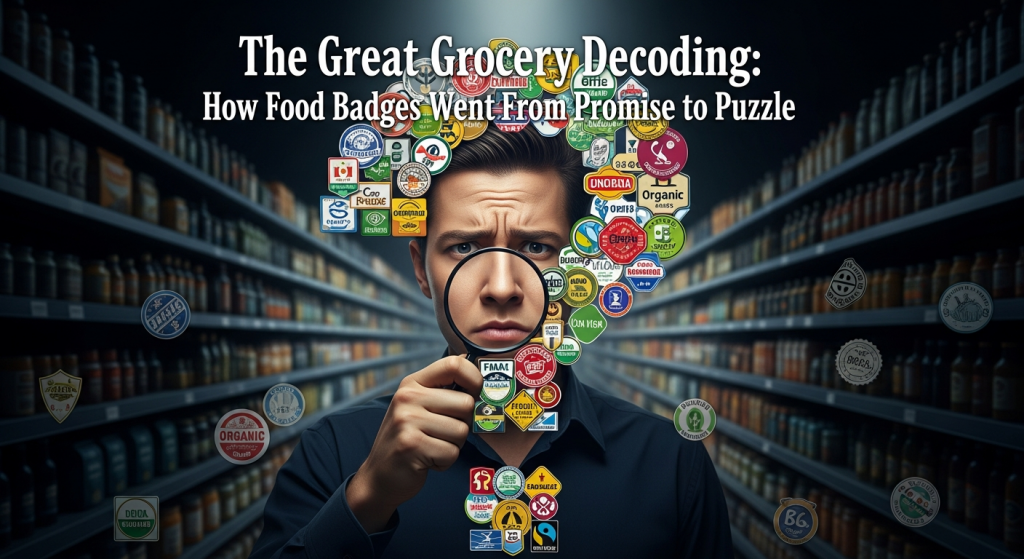
You stand in the supermarket aisle, holding two boxes of crackers. One boasts a green leaf, a butterfly and a smiling globe. The other simply says ‘clean ingredients’ in elegant script. Your mission was simple: find a snack that aligns with your values, something kind to your body, the planet and the people who made it. Yet here you are, frozen, feeling less like an empowered consumer and more like you’re trying to crack a secret code. The very labels meant to guide you have turned the grocery store into a labyrinth of confusion.
This isn’t just about choosing crackers. It’s about the quiet revolution in our shopping carts. We’re no longer just buying calories; we’re voting with our dollars for a healthier, fairer, more sustainable world. We want our food to tell a story, a story of organic soil, humane treatment, fair wages and pure ingredients. But as the badges have multiplied, Organic, Non-GMO, Fair Trade, Vegan, Gluten-Free, ‘Clean Label’, the plot has thickened and the narrative has gotten murky. What started as a promise of transparency has become a puzzle that leaves even the most conscientious shopper scratching their head.
The journey from farm to label is now a complex tale of certification bodies, regulatory gaps, and marketing savvy. Behind every little logo is a world of standards, audits and sometimes, clever semantics. This is the story of how our hunger for better food created a booming language of labels and why so many of us are now lost in translation.
From Counterculture to Checkout: How We Learned to Speak in Badges
To understand the cacophony of labels today, we need to rewind the tape. The story begins not in a corporate boardroom, but in the soil of the 1960s and 70s. The environmental movement awakened a generation to the hidden costs of industrial agriculture, the pesticides leaching into water, the loss of biodiversity. The first ‘organic’ claims were handshake deals at roadside stands, built on pure trust between a grower and an eater. It was a quiet rebellion against the anonymous food system.
Then, the plot thickened. The 80s and 90s brought health scares and a new awareness of dietary needs. Words like ‘gluten-free’ and ‘low-fat’ entered our lexicon, driven by medical necessity and a growing focus on wellness. At the same time, globalization pulled back the curtain. We saw where our coffee and chocolate really came from and the conditions weren’t always pretty. The Fair Trade badge emerged as a promise, a guarantee that the farmer received a fair price. Then came the GMO debates of the late 90s, sparking fear and demand for another label: Non-GMO.
Each wave of consumer concern created a new symbol, a new shorthand for a complex value. What was once a simple transaction became a moral, ethical and health-conscious act. The market listened. The global organic food market, valued at $190 billion in 2022, is racing toward $450 billion. The ‘clean label’ movement, born from a desire for simpler ingredients, has become a marketing powerhouse. But as the badges proliferated, the original, simple language of trust began to fracture into dialects and jargon.
The Credibility Gap: When a Badge is a Promise, and When It’s Just a Slogan
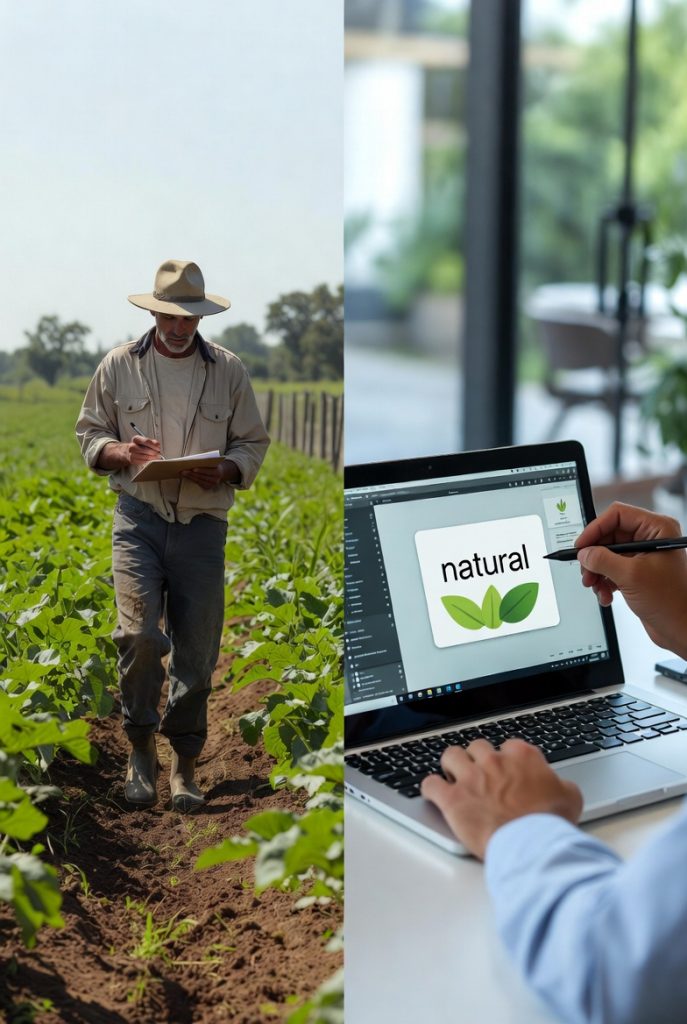
This is the heart of the confusion: not all badges are created equal. In fact, there’s a Grand Canyon-sized gap between them and most of us are shopping without a map. On one side, you have the fortified castles of third-party certification. Think of the USDA Organic seal, the EU’s green Euro-leaf, or the Fairtrade International mark. These are not mere suggestions. They are the result of rigorous, often annual, audits by independent bodies. A farm or factory must prove it meets a thick book of standards, from what’s not in the soil (synthetic pesticides) to how animals are housed. This is costly, time-consuming and credible. It’s a signal that’s hard to fake.
Then, there’s the other side: the open plains of self-declared claims. Words like ‘natural,’ ‘farm-fresh,’ ‘wholesome’ and the ever-popular ‘clean label’ live here. Here’s the crucial fact: in most jurisdictions, these words have no legal definition. A ‘natural’ product in the US isn’t required to be free of pesticides. A ‘clean label’ can mean whatever the marketing department decides it means that quarter. This is the realm of ‘greenwashing’ and ‘healthwashing,’ where the vibe is carefully curated, but the verification is nowhere to be found. A Consumer Reports study found most consumers believe ‘natural’ means no artificial ingredients or pesticides, a belief the label does not guarantee. You might be paying a 40% premium for a feeling, not a fact.
This duality creates real risk. For someone with celiac disease, a self-declared ‘gluten-free’ claim without certification could mean sickness. For a consumer paying extra for ‘fair trade,’ a vague claim could mean no extra cents ever reached the farmer. The badges meant to reduce our ‘transaction cost’, the mental energy of researching every product, sometimes increase it, because we now have to research the researchers.
The High Cost of Confusion: More Than Just a Premium Price
The confusion at the shelf ripples out into our world in profound ways. First, there’s the straightforward economic hit: the ‘organic premium.’ Certification costs for farmers can run into thousands of dollars, a barrier that can push small, genuine family farms out of the market while favoring large agribusinesses that can absorb the cost. You pay more, but does that extra money always support the idyllic small farm on the label? Not necessarily.
The social costs cut deeper. When ‘ethical’ and ‘healthy’ foods carry a persistent price tag, they become luxury items. This creates a two-tiered food system: one for those who can afford to vote with their dollars for health and justice and one for those who cannot. It turns an ethical choice into a privilege, exacerbating health disparities. Furthermore, the absence of rigorous standards can hide real suffering. Without a robust Fair Trade certification, that cheap chocolate may be subsidized by child labor or poverty wages.
And then there’s the erosion of trust, the most fragile commodity of all. Scandals like the ‘Organic 13’ case, where millions of pounds of conventional grains were falsely sold as organic, shake the foundation. When consumers feel duped or chronically confused, they may disengage entirely, cynically dismissing all badges as marketing fluff. This hurts the truly responsible brands who have invested in real transparency and undermines the entire project of building a better food system through informed choice.
Your Decoder Ring: How to Shop in the Age of Information Overload
So, do we surrender to the chaos? Absolutely not. We become smarter, more discerning readers of the story our food tells. Think of yourself not as a passive consumer, but as an investigative journalist with a shopping cart. Your first tool is your eyes. Look past the big, flashy claims. Hunt for the specific, recognizable logo of a certification body, the USDA seal, the Fairtrade mark, the Non-GMO Project butterfly. That logo is your anchor.
Your second tool is your smartphone. See that certifier’s name? Look it up. Reputable organizations like the Non-GMO Project or Fairtrade International have clear, public standards on their websites. Some even have product finders. A quick search can tell you what that ‘Certified Humane’ badge actually requires for animal welfare. For those seductive but vague ‘clean label’ claims, a search for ‘[Brand Name] clean label definition’ can be revealing. Transparency begets trust; opacity is a red flag.
Finally, reframe the goal. You won’t achieve perfect purity. The system is too complex. Instead, aim for conscious progress. Maybe you prioritize one or two values that matter most to you, like organic for your produce and Fair Trade for your coffee and seek out those strong certifications. Support brands that explain their ‘why’ and ‘how’ in detail, not just with buzzwords. And remember, sometimes the most transparent label is no label at all: the direct conversation you have with a farmer at your local market.
The Next Chapter: Blockchain, AI, and the Quest for Radical Transparency
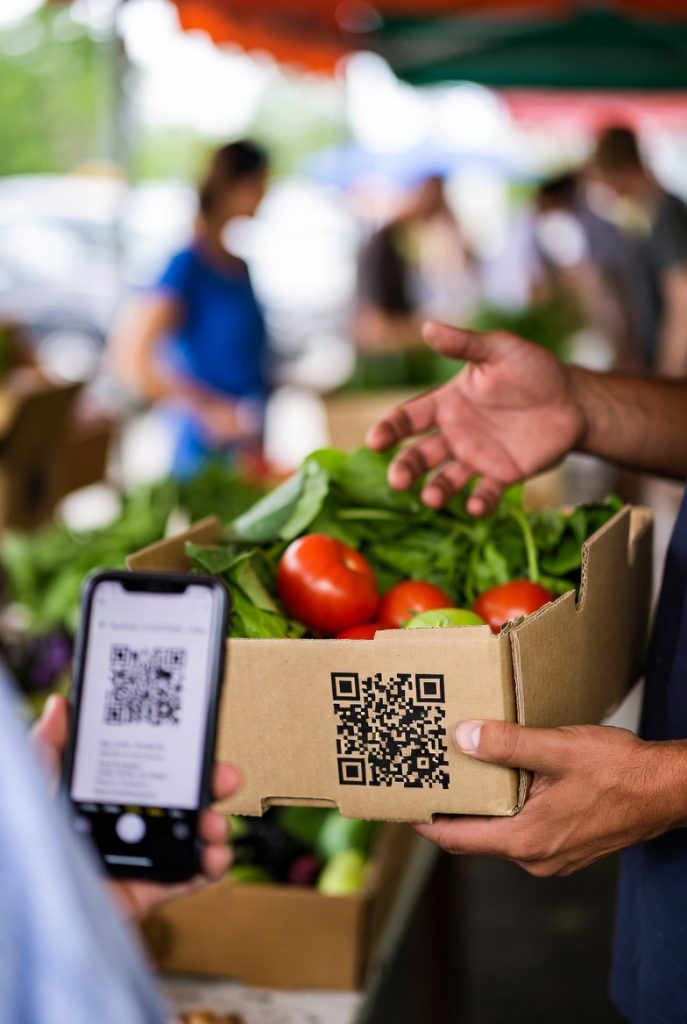
The current label labyrinth is unsustainable and the forces of change are already stirring. The future of food transparency looks less like a crowded badge and more like a window. Imagine scanning a QR code on your chicken package and seeing not just a ‘free-range’ claim, but a video of the specific farm, the diet of the chickens, the carbon footprint of the shipment and the audit reports from the certifier. This is the promise of blockchain technology—creating an immutable, shared record of a product’s journey that no single company can alter.
Artificial intelligence is poised to become our personal label translator. Apps could soon scan a product, instantly cross-reference its claims against certification databases and ingredient analyses and give you a plain-English breakdown: ‘This “natural” claim is self-declared. This organic certification is verified by USDA. Be aware this product has a high sugar content despite its health halo.’
We may also see a shift from process-based badges (‘we followed these rules’) to outcome-based ones (‘this is the measured biodiversity impact on this farm’). And as the climate crisis deepens, badges for carbon footprint and regenerative agriculture, which rebuilds soil health, will move from niche to necessity. The pressure will also grow on regulators to finally define the wild west of terms like ‘natural’ and ‘clean.’ The end goal is a system where the story behind our food is not a mystery to be decoded, but an open book we can all read and believe.
Conclusion
The great grocery decoding is more than a first-world problem. It’s a sign of our profound desire to reconnect with what we eat, to know its origins, its impact and its truth. The confusion we feel today is the growing pain of a food system in transition, straining under the weight of our collective conscience. Those little badges represent our hopes for a better world, packaged and sold back to us. Some are genuine medals of honor, earned through hard work and verification. Others are empty costumes, worn for the show.
Our power lies not in mastering every detail of every standard, but in becoming literate in the language of trust. To look for the signal in the noise. To reward radical transparency with our loyalty. The future of our food isn’t written on a label yet. It’s being written in the choices we make, the questions we ask and the demand we voice for a system where the story on the outside finally, honestly, matches the story on the inside. The next time you stand in that aisle, remember: you’re not just choosing a product. You’re helping choose what comes next.
This article explores how the well-intentioned proliferation of food certification badges like Organic, Non-GMO, and Fair Trade has created widespread consumer confusion. It traces the historical roots of labeling, explains the critical difference between verified certifications and misleading self-declared claims, and examines the social and economic costs of this ambiguity. Finally, it offers practical guidance for navigating the grocery maze and envisions a future of radical transparency through technology.
References
- The Truth Behind Food Labels
- Benefits of Organic, Non-GMO, Gluten-Free Labels
- Ask UConn Extension: What Do the Food Labels Organic, Natural and Non-GMO Actually Mean?
- Food Labels Explained
- Food Certification Labels Explained
- Decoding Food Labels: Consumer Perceptions and Information Needs
- Fairtrade International Annual Report 2022-2023
- Organic Food and Beverages Market Report
- Plant-based Food Market Report
- Organic Prices and Premiums
- The Problem with ‘Natural’ Food Labels
- USDA Strengthening Organic Enforcement (SOE) Final Rule
- Regulation (EU) 2018/848 on organic production
- Non-GMO Project Standard
- National Bioengineered Food Disclosure Standard
About The Author: Imandi
More posts by Imandi