
For most of us, a trip down the grocery aisle is a simple act of choice. We pick up a loaf of bread, a box of pasta or a bag of cookies based on taste, price or a passing whim. But for millions of people around the world, that same simple act is a high-stakes exercise in trust, science and survival. Their eyes don’t scan for flavors; they search for a single, crucial phrase: ‘gluten-free’.
This label, now plastered on everything from artisanal bread to bottled water, has become a cultural phenomenon. It’s hailed as a wellness trend, a diet fad and a marketing goldmine. But beneath that trendy veneer lies a stark medical reality. For the 1% of the global population with celiac disease, an autoimmune disorder where gluten triggers the body to attack its own small intestine. This label isn’t about lifestyle. It’s about life itself. A single crumb, a trace amount invisible to the naked eye, can cause weeks of pain, malnutrition and long-term damage.
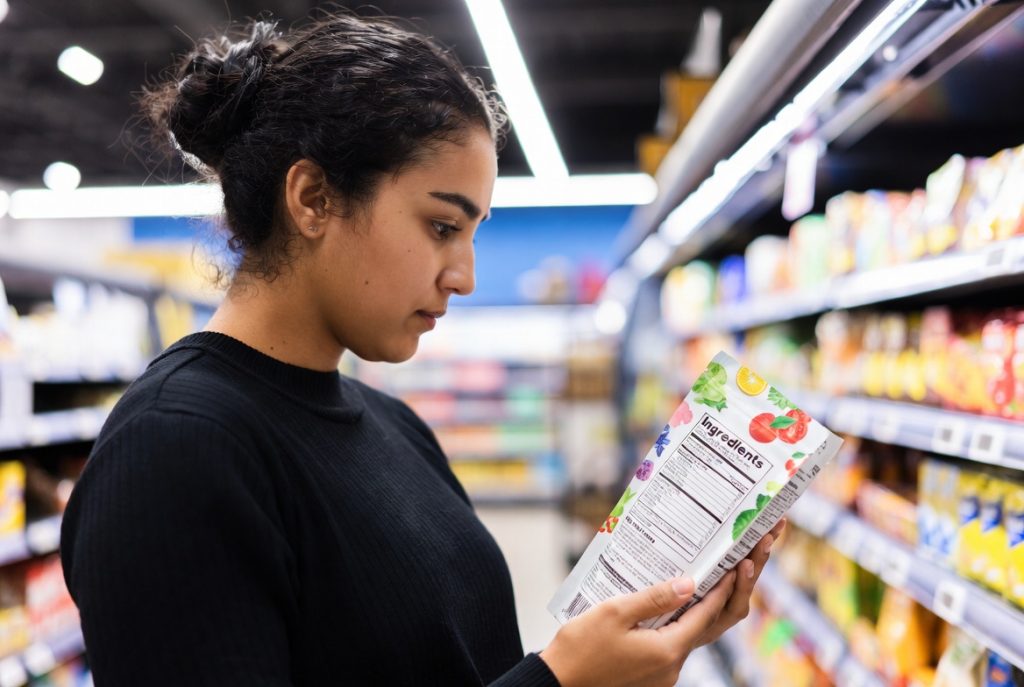
So, what does ‘gluten-free’ actually guarantee? Is that certified symbol on the box worth the extra dollar? And in a world where the claim can be made voluntarily, how can the people who need it most navigate a landscape filled with confusion, cross-contamination and costly misconceptions? This is the story of two letters, ‘G’ and ‘F’ and the profound weight they carry for the community that depends on them.
The 20 Parts Per Million Promise: A Global Lifeline
The cornerstone of safety is a number so small it’s almost abstract: 20 parts per million (ppm). Imagine a single grain of sand in an hourglass. Now imagine finding that grain in 50,000 others. That’s the level of precision we’re talking about.
This 20-ppm threshold, established by the international Codex Alimentarius and adopted by both the US Food and Drug Administration(FDA) and the European Union, is the legal bedrock of the ‘gluten-free’ claim. It means that any food bearing that label must contain less than milligrams of gluten per kilogram of food.
This wasn’t always the case. For decades, people with celiac disease navigated a wild west of labeling, relying on guesswork and often getting sick. The FDA’s 2013 ruling and the EU’s Regulation 828/2014 didn’t just create a standard; they created a lifeline. ‘It could never really be sure if their body would tolerate a food with that label,’ one analysis noted of the pre-regulation era. Now, that uncertainty is supposed to be gone. When you see ‘gluten-free’ on a bag of chips in Chicago or a box of crackers in Copenhagen, it is, by law, a promise that the product meets this stringent, scientifically-backed limit considered safe for the vast majority of people with celiac disease.
The Trust Gap: When a Word Isn’t Enough
But here’s where the story gets complicated. In the US, declaring a product ‘gluten-free’ is voluntary. A manufacturer can choose to make the claim, but if they do, they must comply with the <20 ppm rule. This creates a paradox of trust. For the millions with wheat allergies, labeling is mandatory. For the celiac community, it’s a voluntary system where they must rely on what’s excluded, not what’s included.
This gap between a manufacturer’s self-declaration and a consumer’s need for absolute certainty is where third-party certification steps in. Enter symbols like the Crossed Grain Trademark, licensed by celiac associations in Europe or the GFCO mark in the US. These are not just logos; they are shields. They represent an audit trail. To earn them, a company must open its doors to independent inspectors who scrutinize everything: the source of the raw oats, the cleaning procedures between production runs, the training of the line workers, the air filtration systems to prevent airborne flour contamination.
The difference in consumer confidence is staggering. Research shows 78% of gluten-free consumers trust products with the Crossed Grain symbol more than those with just the words ‘gluten-free’ and 95% want to see it on all their food. This certification goes ‘above and beyond the regulations,’ providing a source of trust that comes from oversight by the very patient organizations that understand the stakes.
The Invisible Enemy: The Relentless Threat of Cross-Contamination

The greatest danger to someone with celiac disease often isn’t in the recipe; it’s in the environment. This is the world of cross-contamination or cross-contact, an invisible transfer that renders a naturally safe food perilous. A shared toaster, a fryer used for breaded chicken, a scoop that dipped into a bin of regular flour before touching the gluten- free oats, a dusting of wheat flour settling on a prep surface.
The data here is sobering. One study found that about one-third of meals ordered as ‘gluten-free’ in restaurants actually contained detectable gluten. In manufacturing, while most comply, surveys have found products, especially in less regulated markets, contaminated at levels many times the legal limit. This is why certification matters. It verifies that a ‘dedicated facility’ or ‘allergen-controlled line’ isn’t just marketing speak. It’s a validated process where the supply chain itself, from field to fork, is analyzed for risk.
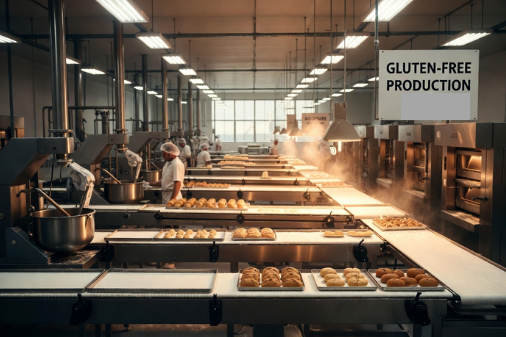
For the individual, this turns every meal outside the home into a tactical operation. It means asking the waiter detailed, sometimes awkward questions: ‘Is the fryer dedicated?’, ‘Do you use a separate colander for pasta?’, ‘Can the chef change gloves?’ It’s a social tax paid in vigilance, where a moment of a kitchen’s carelessness can cost a person weeks of health.
Beyond Celiac: The Myths, the Market and the Real Cost
The rise of the gluten-free diet as a wellness trend has been a double-edged sword for the celiac community. On one hand, it has driven incredible innovation, better taste and wider availability. The global market, valued at over $6 billion, is projected to double in the coming decade. On the other hand, it has spawned a cloud of myths that trivialize the medical condition.
Myth 1: Gluten-free is healthier for everyone. Reality: Many processed gluten-free foods are higher in sugar, fat and calories and lower in fiber than their conventional counterparts, as manufacturers compensate for texture and taste.
Myth 2: ‘Wheat-free’ equals ‘gluten-free.’ Reality: Gluten is also in barley and rye. A wheat- free product can still be loaded with gluten from malt or brewer’s yeast.
Myth 3: It’s just a fad. Reality: For the celiac community, it is a non-negotiable, lifelong medical treatment, not a choice.
This confusion has a real economic and social cost. Gluten-free products are notoriously more expensive, often 50% to 400% pricier. This places a severe financial burden on households managing celiac disease. Socially, it can lead to isolation and the frustrating experience of having a serious autoimmune condition mistaken for a dietary preference.
The Future of Safe Eating: From Enzymes to Transparency
The frontier of gluten-free living is moving beyond mere avoidance. Scientific research is exploring therapeutic avenues like enzyme pills that could break down trace gluten in the stomach or even vaccines aimed at desensitizing the immune system. While a strict diet remains the only current treatment, these developments offer future hope.
More immediately, the demand is shifting toward radical transparency. Consumers are pushing for clearer labeling about shared facilities and cross-contamination risks. Technology, from blockchain for supply-chain tracking to portable gluten sensors (though their accuracy is debated), promises a new era of verification. The trend is toward a food system where ‘gluten-free’ isn’t just a claim on a label but a verifiable story of a product’s journey, accessible to the consumer who needs that information to stay healthy.
The ultimate goal is normalization, not of the diet, but of safety. It’s about a world where the ‘free-from’ aisle isn’t a niche but a benchmark for rigorous production, where restaurants treat allergen protocols with the seriousness of a fire code and where the people for whom this label is a medical prescription can shop and dine with the same simple confidence that everyone else takes for granted.

References
AOECS Standard for Gluten-Free Foods & Crossed Grain Trademark
U.S. FDA: Questions and Answers on the Gluten-Free Food Labeling Final Rule
FDA Docket on Gluten-Free Labeling
Canadian Celiac Association Gluten-Free Certification Program
Celiac Disease Foundation: What is Celiac Disease?
European Commission: Gluten-Free Food Information
U.S. FDA: Gluten-Free Labeling of Foods
Codex Alimentarius Standard CXS 118–1979 (Gluten-Free Foods)
Beyond Celiac: Restaurant Gluten Contamination Study
National Celiac Association: Gluten-Removed Beer
Chipotle Allergens and Dietary Information
Grand View Research: Gluten-Free Products Market Analysis
Market Research Future: Gluten-Free Products Market Report


About The Author: Imandi
More posts by Imandi